A collaboration of researchers from the ULB and the VUB just concluded the first of three planned experiments on the International Space Station with the goal of studying the effect of microgravity on the crystallization of proteins. Proteins are large, complex organic molecules that play a key role in biological processes. They can crystallize into many different lattice structures or “polymorphs” and controlling this process is critical in managing various human pathologies as well as in the production of pharmeceuticals. Despite more than 30 years of intensive work by chemists, physicists and biologists, protein crystallization remains poorly understood so continues to motivate both basic and applied research. The joint ULB/VUB team conducted an experiment on the ISS using the newly installed Colloidal Light Scattering Instrument (COLIS) which was designed with input from them as well as other European research groups for studying crystallization and glass formation. The aim of the experiment was to probe the effects of microgravity which, while having little effect on individual protein molecules, becomes important for larger clusters of molecules – so-called “nucleation precursors” – that are thought to play a key role in governing protein crystallization.
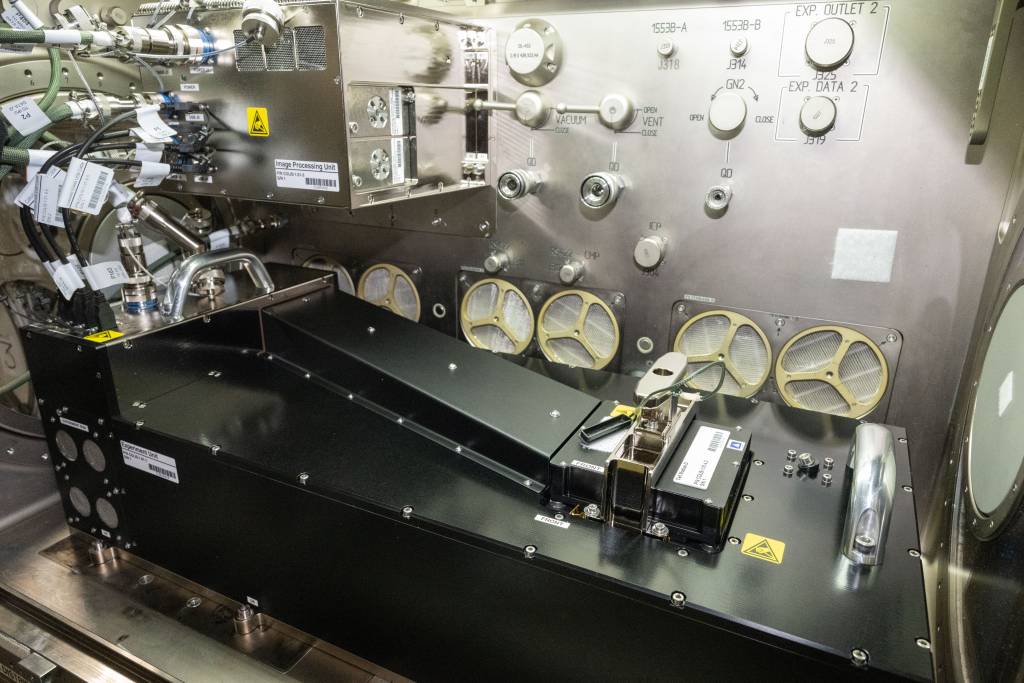
The figure shows the COLIS instrument (the black unit) as installed on the ISS. The cell module, containing the protein sample studied, plugs into this and is the square object with the small handle, just to the right of center of COLIS.